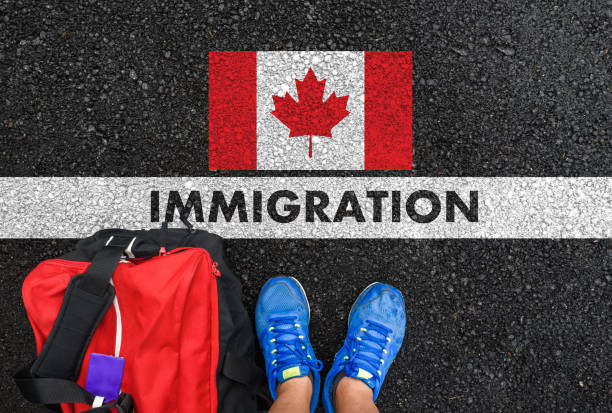
For most of the post-pandemic period, Canada operated on the assumption that more immigration was almost always better — an economic and demographic necessity for a country with an aging population, a skills shortage, and vast geographic capacity. Annual immigration targets reached historic highs, topping 500,000 permanent residents in 2023.
The policy landscape in 2026 looks markedly different. Immigration Refugees and Citizenship Canada (IRCC) has announced reductions in permanent resident targets, a tightening of the temporary foreign worker and international student pathways that had expanded significantly in recent years, and a stated intent to better align immigration intake with housing supply capacity and labour market absorption.
Why the Shift
Public opinion data from Leger, Abacus, and the Environics Institute through 2024 and 2025 showed a significant decline in the share of Canadians who believed immigration levels were "about right" — a reversal of the broadly positive public attitudes that had characterized Canadian opinion on immigration for decades. Housing costs, pressure on public services, and visible infrastructure strain in major cities were the most commonly cited concerns.
Economists and immigration researchers have been more divided. Some, including those associated with the Century Initiative, argue that reduced immigration targets will accelerate Canada's demographic challenge — an aging population with insufficient working-age labour supply to fund public services. Others, including several researchers at the C.D. Howe Institute, argued that the pace of growth had outrun Canada's capacity to absorb newcomers into housing, healthcare, and the labour market, and that a recalibration was appropriate.
The International Student Question
The most contentious specific element of the policy shift has been the cap on international student permits. Canada had become, per capita, one of the largest destinations for international students globally — with the international student population growing from approximately 350,000 in 2015 to over 1 million by 2023.
A federal audit found that a significant portion of international student growth had been driven by private colleges of variable quality, with international students paying high tuition fees in exchange for a pathway to permanent residence rather than primarily for the educational value. The audit recommended tighter oversight and quality standards. The subsequent cap on new permits has been criticized by post-secondary institutions that depend heavily on international student tuition revenue.
What the Research Says About Integration
The evidence on immigration's economic impacts is generally positive in the long run but more mixed in the short run, particularly for housing and labour market competition effects in destination cities. A 2025 Bank of Canada staff working paper found that high-immigration years were associated with upward pressure on rents in major urban centres, consistent with basic supply-demand logic in housing markets with constrained supply.
Research on immigrant economic outcomes shows that integration success — measured by labour market participation, wage convergence, and social inclusion — depends heavily on government investment in settlement services, credential recognition, and language training. These are areas where Canada's track record is mixed, and where funding has not always kept pace with intake volumes.
The policy recalibration now underway reflects a genuine tension in Canadian public policy between long-term demographic and economic needs, short-term infrastructure and housing constraints, and public attitudes that have shifted faster than many in the policy community anticipated. How the balance is struck over the next several years will shape Canada's workforce, its communities, and its economy for a generation.